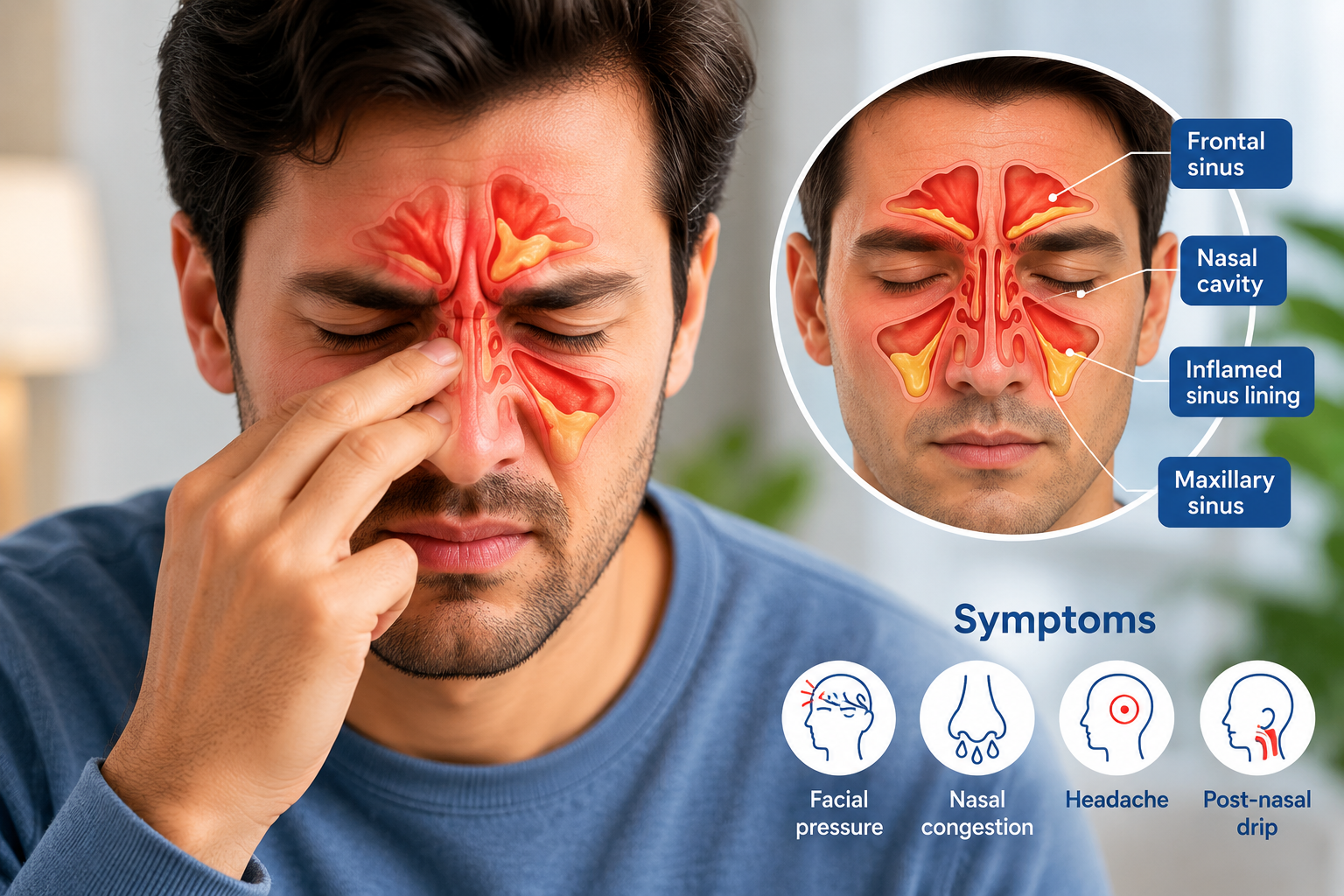
You land in Hyderabad after a fifteen-hour flight. Within forty-eight hours, your nose is blocked, your head feels like it’s wrapped in cotton, and you’re breathing through your mouth like a fish.
Your relatives smile knowingly. “It happens to everyone,” they say. “You’ll adjust.” Two weeks later, you’re still adjusting. And now there’s a wedding to attend, relatives to meet, and you’re carrying a pharmacy in your suitcase.
If this sounds familiar, you’re not alone. Sinus issues are the uninvited guest at every India trip and they don’t discriminate between returnees, NRIs, or foreigners. Indian weather, pollution, and allergens create a perfect storm for sinus misery.
Here’s what actually helps, what doesn’t, and how to stop dreading your next visit.
----------------------------------------------------------------------------------------------
Why Your Sinuses Hate Indian Weather: India doesn’t do moderate. The weather swings between extremes, and your sinuses bear the brunt.
Summer (March–June):
Dry, dusty, and often hitting 45°C heat dehydrates your nasal passages. Air conditioning feels like salvation — until the temperature shock triggers more inflammation.
Monsoon (July–September): Humidity spikes to 90% -> Mold blooms everywhere -> Viral infections spread in crowded cities, Dust mites thrive. People having prior Allergies are the ones most commonly affected. Allergy gets triggered and as a result of it, your sinuses get affected.
Post-Monsoon (October–November): The air clears temporarily, but pollen counts explode. Parthenium weed, Ragweed, Gulmohar flowers, Eucalyptus, and various grasses trigger allergic rhinitis in susceptible people.
Winter (December–February): Cold, dry air irritates nasal passages. Smog in Delhi and other northern cities becomes a health emergency. Your sinuses protest with pain, pressure, and relentless congestion. No season is truly safe. The key is knowing which enemy you’re fighting.
----------------------------------------------------------------------------------------------
The Pollution Factor Nobody Talks About. Air quality in major Indian cities regularly exceeds safe limits by 10–20 times. Delhi’s winter smog is infamous, but Mumbai, Bangalore, and Hyderabad aren’t far behind. Vehicle exhaust, construction dust, crop burning, and industrial emissions create a toxic soup.
What pollution does to your sinuses:
• Pollution irritates the nasal lining causing inflammation and the swelling increases mucus production.
• Pollution Impairs the tiny hair-like cilia that clears the mucus.
• All these Increase susceptibility to infections.
• Pollution also triggers allergic responses even in non-allergic people.
The Delhi belly nobody mentions: Visitors prepare for stomach issues. Few prepare for sinus emergencies.
AQI above 300 — common in winter — can cause sinus pain, headaches, and respiratory symptoms within hours.
----------------------------------------------------------------------------------------------
Home Remedies: What Works vs. What Wastes Time
Indian households have a remedy for everything. Some help. Others are placebos with good
marketing.
Actually effective:
Steam inhalation — Loosens thick mucus, reduces congestion.
Add a pinch of turmeric or eucalyptus oil for mild anti-inflammatory benefit.
Do this 2–3 times daily during bad spells.
Use a proper steam inhaler or just a bowl of hot water with a towel over your head.
Breathe through nose keeping eyes and mouth closed.
Saline nasal rinses — Flushes allergens, pollution particles, and thick mucus. Use distilled
or boiled-then-cooled water only. Tap water can introduce serious infections.
Hydration — Boring but essential. Dry nasal passages worsen everything. Drink more water than you think you need. Avoid drinking hot water, if you feel like, always drink luke-warm water and avoid excessive caffeine and alcohol, which dehydrate.
Overrated or questionable:
Apple cider vinegar — No solid evidence for sinus relief. The acidity may irritate sensitive throats.
Essential oils applied directly — Never put undiluted oils in your nostrils. They can cause chemical burns. Steam inhalation is the safe delivery method.
Spicy food as treatment — Capsaicin can temporarily open nasal passages, but it’s not a treatment. Don’t force yourself to eat spicy food if it causes other issues.
Local herbal concoction — Some work. Many are contaminated with heavy metals or steroids.
Stick to remedies you can verify or get from a trusted source.
----------------------------------------------------------------------------------------------
Over-the-Counter Medications in India
Indian pharmacies are liberally stocked and lightly regulated. You can get almost anything without a prescription. This is convenient and dangerous.
Avoid:
The Nasal Spray Pitfall: Be really careful with the nasal drops/sprays given over-the-counter.
Ever reached for nasal spray without a second thought? you might trade a stuffy nose for bigger troubles.
Picture this: You grab nasal drops to breathe easy, but without pro tips on usage and duration, they turn your relief into a rebound nightmare.
Always use prescribed nasal sprays under guidance of an ENT specialist.
The reason being: there are different types of Nasal sprays/drops available, each has it’s own purpose, method of usage and specific duration of usage.
Antibiotics for uncomplicated sinusitis — Most sinus infections are viral. Antibiotics don’t help and contribute to resistance.
Ayurvedic or herbal remedies of unknown composition — Quality control varies wildly. Some contain undisclosed steroids or heavy metals.
When Antibiotics Are Actually Necessary
Sometimes sinus infections do need antibiotics. The trick is knowing when.
----------------------------------------------------------------------------------------------
Pre-Trip Preparation Checklist
Smart travelers prepare. Sinus sufferers prepare obsessively.
One week before:
• Stock your travel pharmacy: saline nasal spray(can be used for mild-nasal block), antihistamines.
• Download air quality apps (AirVisual, SAFAR) for your destination.
• Identify a reliable ENT specialist or hospital at your destination.
Pack:
• Portable steam inhaler or travel neti pot
• High-quality N95 or N99 masks for pollution days
• Medical records if you have chronic sinus issues.
During your stay:
• Check AQI daily. Above 200, stay indoors when possible. Above 300, wear masks outside.
• Run air purifiers in your room if available. Many hotels in places with high AQI like Delhi now provide them.
• Avoid early morning and late evening outdoor exercise when pollution peaks.
• Inhale less-heat steam daily, especially after being outside in bad air.
----------------------------------------------------------------------------------------------
The Returnee’s Dilemma
There’s a particular guilt to getting sick every time you visit family. You want to be present. You want to attend every function. But your sinuses have other plans.
Give yourself permission to:
• Skip events when you’re miserable
• Stay in air-conditioned spaces, but avoid positioning yourself directly in front of an air conditioner to prevent exposure to its concentrated cold air blasts.
• Leave early from gatherings if you’re struggling.
• Rest without apologizing.
Your family would rather have you healthy for part of the trip than suffering through all of it.
Sinus pain is real—don’t ignore it or let others dismiss it.
----------------------------------------------------------------------------------------------
When to See a Specialist -
Recurrent sinus issues on India trips aren’t inevitable. They’re a sign that something needs evaluation.
Consider an ENT consultation if:
• You get sinus infections every time you visit India
• Symptoms last more than 2 weeks
• Over-the-counter treatments don’t help
• You have reduced sense of smell
• You get facial pain/heaviness or headaches regularly
A specialist can identify:
• Structural issues (deviated septum, increased size of turbinates, nasal polyps)
• Chronic allergies that need targeted treatment
• Fungal sinusitis (more common in India than many realize)
• Immune deficiencies or other underlying conditions
Treatment might be simpler than you think. Some people benefit enormously from a specific medication regimen or a single surgical procedure.
----------------------------------------------------------------------------------------------
Living With It (Without Dreading It)
You don’t have to choose between visiting India and breathing comfortably. With preparation, realistic expectations, and the right tools, you can manage sinus issues without them managing you.
The key shifts:
• From reactive (dealing with crises) to proactive (preventing them)
• From hoping for the best to having a plan
• From suffering silently to seeking help when needed
Your next trip doesn’t have to be a repeat of the last one. Start the precautions early. Pack the right medications. Check the air quality.
And remember that taking care of yourself isn’t weakness — it’s how you stay present for the people you came to see.